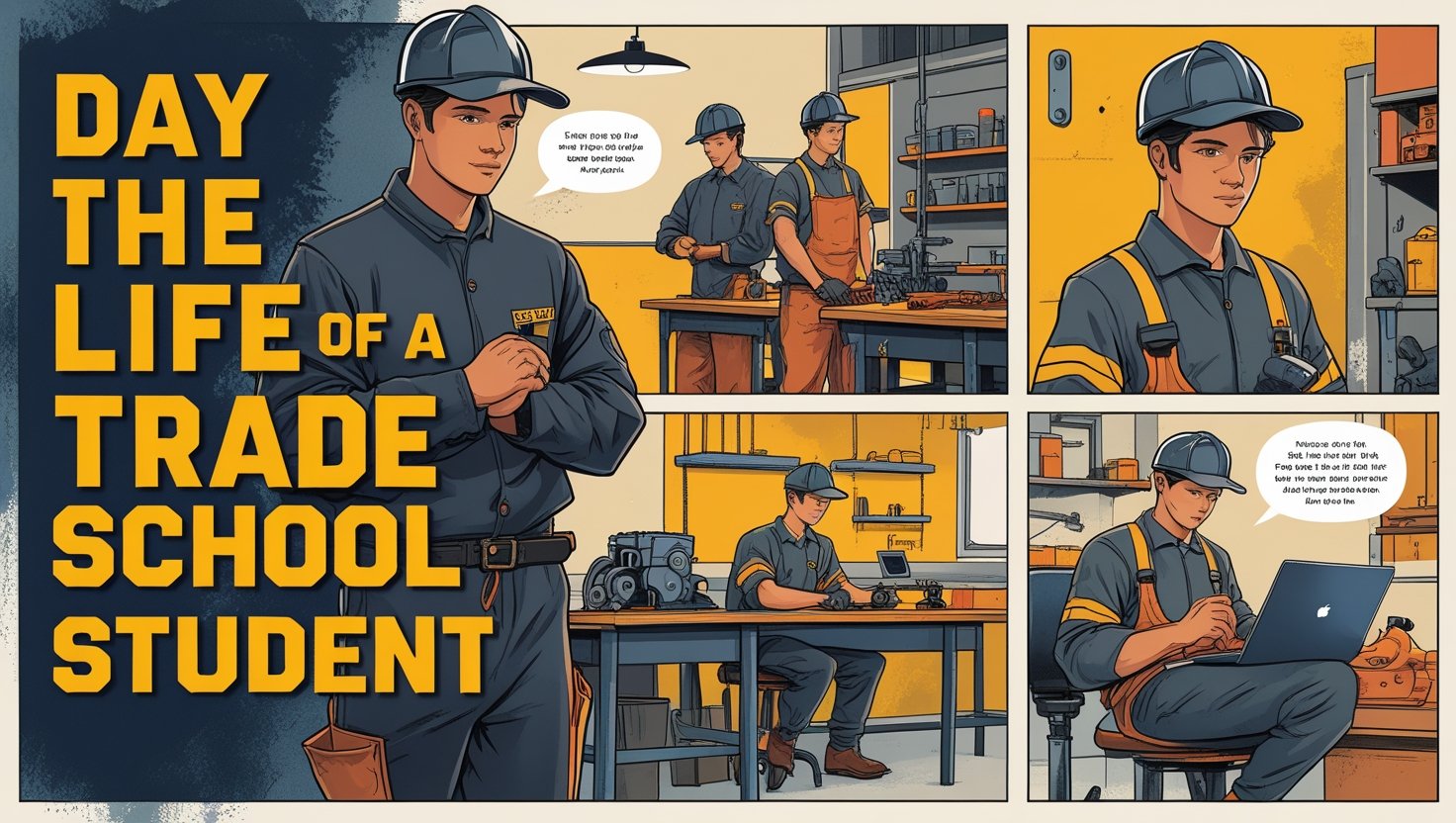
In today’s fast-paced and career-focused world, trade schools have become a very beneficial option for people who want to start their professional life quickly. Trade schools provide more practical training than theory, which gives students real-world skills that are directly useful in a job. But often, people do not know what the daily routine of a trade school student is like. The purpose of this blog is to show you a day in the life of a typical trade school student so that you can understand how focused, engaging, and skill-based this journey is.
Discipline and dedication are very important in the life of a trade school student. Waking up early in the morning, reaching campus on time, and receiving hands-on training every day are part of this routine. Their routine is somewhat different from that of a normal college student because there is a lot of practical work and labs here. Students practice daily in fields such as welding, HVAC, electrical work, or medical assisting, which hone their skills.
In this blog, we will see how a trade school student spends his day, how he attends his classes, how he takes breaks, and what activities he does at home after the practical training. After knowing all this, you will get a real idea of trade school life, which can help you in your future planning.
A Productive Morning Routine:
The day of trade school students often begins early in the morning because their schedules are structured and time-bound. Students often wake up at 6 or 7 a.m. so they can get ready and arrive on campus on time. The day begins with a light breakfast such as eggs, toast, or tea. This provides energy so that students can actively participate throughout the day. Many students use public transportation while some come by bike or car.
Trade school time often begins at 8 or 9 a.m. so punctuality is important. In the morning, students wear their uniform or specific gear appropriate for their field such as a welding jacket, safety shoes or medical scrubs. After reaching campus, students mark attendance and check the class setup.
Some students start the day with a short review session where they revise previous lessons. During this time, they may also ask questions to their instructors or participate in peer discussions. Morning time is considered best for productivity, so trade school students have to adopt an early routine. The benefit of this healthy and focused routine is that they are mentally and physically prepared for the practical sessions throughout the day. This morning start is the foundation of their success.
Hands-On Learning in the Classroom:
The most important aspect of a trade school is its hands-on learning system. These schools provide practical training to students instead of theory, which helps them become proficient in a specific skill. When a student comes to class, he or she encounters tools, machines, and real equipment instead of a whiteboard or long lectures. For example, if someone has taken an electrician course, he or she is connecting circuits, checking wires, or learning how to use tools.
There are often 10 to 15 students in a class, so the instructor can give proper attention to each student. Instructors are themselves industry professionals who have worked for many years. They teach students not just from books but also from their own experiences.
Classes also have group activities where students form teams and complete a project. This improves their collaboration skills and confidence. Each student is given responsibility for his/her task, and finally, the instructor checks their work and gives feedback.
This kind of learning prepares the student for the real-world environment. When he/she graduates, it does not take him/her much time to learn the work because he/she has already gained practical experience of every situation. This practical approach of trade school makes the student a strong competitor in the job market.
Break Time and Student Interaction:
The environment of a trade school is not limited to just work and training, break time is also an important part of it. Short breaks in between the day-long training sessions give students a chance to relax. Usually after every 2 or 3 hours, a break of 15-20 minutes is given where students eat their breakfast, drink tea or simply rest.
This time is not just for physical rest but also for mental recharge. Trade school students are often from the same field, so a natural bond develops between them. During break time, they discuss their assignments, experiences, or career goals. Many times, instructors also have short conversations with students in an informal setting that become a source of guidance and motivation.
Some students check their phones, play games, or just sit for a while in the fresh air. These short breaks energize them for the next session. Not all the time is needed in trade school life, but balance is also important so that students stay mentally fresh.
The biggest benefit of break time is that student’s network with each other. These connections come in handy when they enter the professional field in the future. A strong support system makes their learning journey easier.
Afternoon Training, Labs, or Internships:
Afternoon is a dynamic time for trade school students as they are either in training labs or on field visits for internships. After lunch, students perform practical work in labs specific to their program, such as automotive repair, HVAC system testing, or use of medical tools. In these labs, each student must perform their work independently while an instructor monitors.
Internships are also an important part of the trade school curriculum. Many students do internships at local companies, workshops, or clinics in the afternoons, where they work with real customers. This experience gives them exposure to a professional environment and makes them confident in their field.
In some programs, like computer support or cybersecurity, students solve case studies or complete simulations in computer labs. Projects are also assigned during afternoon sessions that teach the concepts of teamwork and deadlines.
The purpose of afternoon training is that students do not depend only on bookish knowledge but learn by doing work with their hands. This daily practice polishes their skills. This time in the afternoon is the core of their learning process, where the theory learned in the classroom is put to a practical test. This phase makes them real professionals.
Evening Wrap-Up and Homework:
At the end of the day, when practical sessions and internships are completed, trade school students wrap up their day. Often, instructors hold a short session where they review the day, ask students questions, and give feedback on their work. This is a time for reflection, where students think about what they learned today, what is clear to them, and what needs more work.
After that, students go home and get some homework assignments. These assignments are based on theory or technical reading, sometimes they watch videos and write down some observations. Trade school homework is not too lengthy but is relevant and is linked to the practical session of the next day.
Some students complete online modules or attempt quizzes in the evening. Apart from this, they also clean and organize their tools so that everything is ready for the next day.
Evening time is a mix of relaxation and self-study. Students spend time with their families, but some discipline is necessary in their routine. This consistency develops their professionalism. This aspect of trade school life shows that every student takes their future seriously and works on their growth every day.
Conclusion:
The life of a trade school student is structured, focused, and highly rewarding. While their daily routine is demanding, it gives those practical skills and real-world experience that are vital to their future career. Waking up early every day, getting to class on time, and receiving hands-on training teach them the discipline and responsibility that are vital in any professional environment.
A trade school student is not limited to just knowing books. He interacts with some machine, tool, or system every day, improving his skills and building his confidence. Breaks and small social interactions are also a part of his routine which keeps him mentally fresh and builds a strong network with friends.
The afternoon is spent either in the labs or at an internship location where the student gets professional exposure by working with real clients. At night he reviews the day, completes his homework and prepares for the next day. This entire routine is a part of a well-rounded training process which makes him not just a student but a future-ready skilled professional.
Ultimately, trade school life is perfect for those who prefer to learn through work rather than theory. This journey is difficult, but its result is very sweet.
FAQs:
- What time does a typical trade school student start their day?
A typical trade school student starts their day early, usually waking up around 6 or 7 a.m. to prepare for class, which often begins at 8 or 9 a.m. This early start helps them maintain a disciplined and productive routine that aligns with their hands-on training schedule. - How is trade school different from a traditional college?
Unlike traditional colleges that focus more on theory, trade schools emphasize hands-on training. Students work directly with tools, machines, or real-world environments like workshops or clinics, gaining practical skills that are directly applicable to their chosen profession. - Do trade school students get any breaks during the day?
Yes, students get short breaks after every 2–3 hours of training. These 15–20 minute breaks allow them to rest, eat, or socialize with classmates. Breaks also offer opportunities for peer discussions and informal interactions with instructors, contributing to a balanced learning environment. - What kind of activities do students do in the afternoon?
In the afternoon, students usually participate in lab-based training, simulations, or internships. Depending on their program, they may work on automotive repairs, HVAC systems, electrical circuits, or medical procedures. This part of the day gives them real-world exposure and helps polish their technical skills. - Do trade school students have homework?
Yes, trade school students do receive homework, but it is usually brief and focused. Assignments may include technical reading, watching instructional videos, or preparing for the next day’s hands-on session. This light academic work supports their practical training and helps reinforce what they’ve learned.