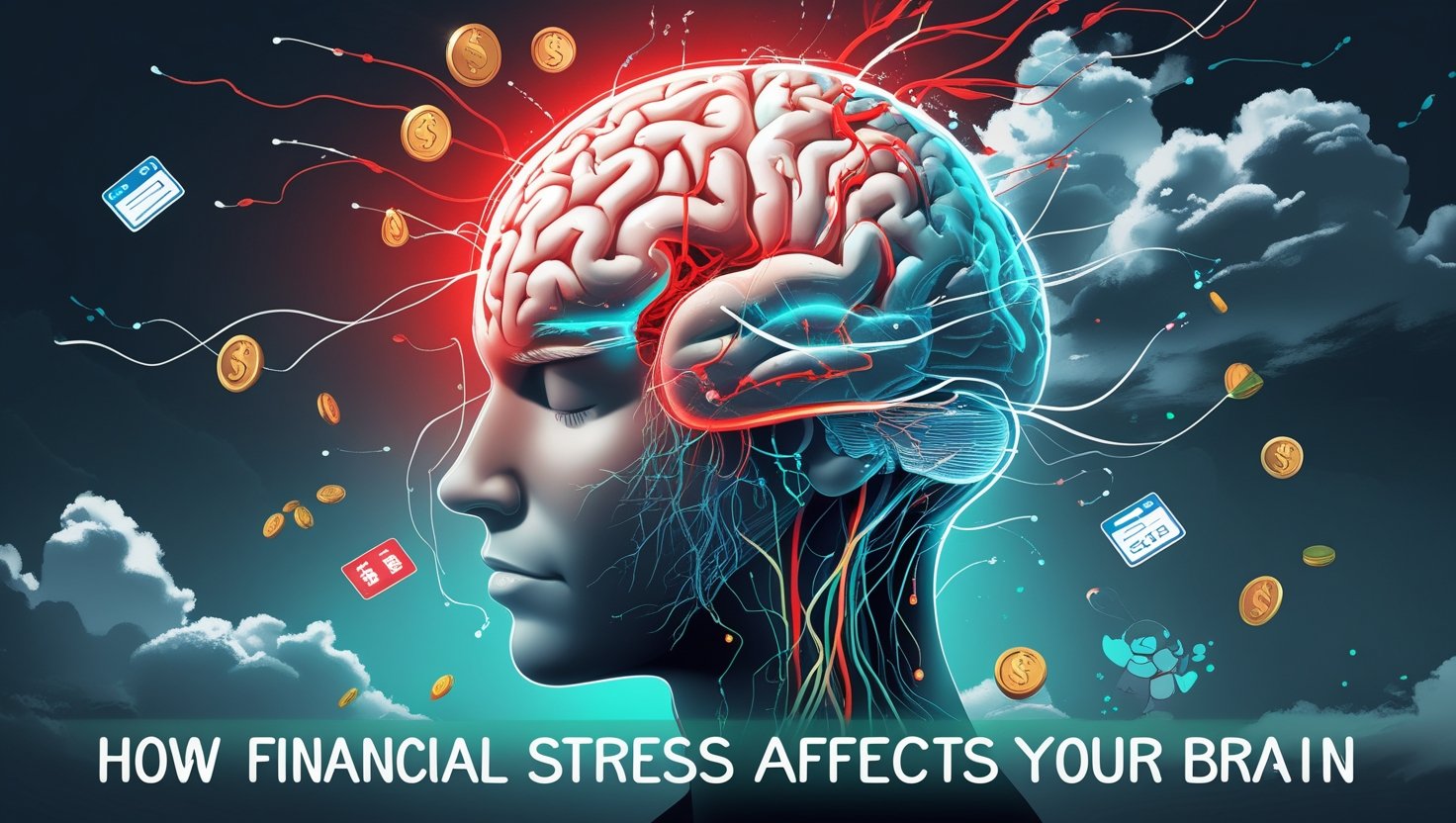
Financial stress is such a mental condition that is not just limited to your bank account but also deeply affects your mental peace, way of working, and your ability to think. When a person is worried about money all the time, such as paying off debts, paying bills, or meeting daily expenses, that pressure slowly starts consuming their mental health. Financial pressure has become common today, but people ignore its effects, thinking it is just an external problem, when in reality, it affects their brain function.
Science has also proved that chronic stress not only impairs your memory and decision-making but also makes you feel emotionally unstable. This blog will shed light on how financial stress affects different parts of your brain, what effect it has on your decisions, and how you can protect your mental and financial health. With this understanding, you can not only regain your mental peace but can also choose a positive and manageable path for your future. Let’s explore all these aspects in detail.
Understanding Financial Stress:
Financial stress is the financial pressure that deeply affects your daily decisions, your peace, and your psychological well-being. When a person has low income and high expenses, or when he is worried about employment, finds it difficult to pay loans, or gets unexpected medical or household bills, it creates stress. This is not just temporary tension but can turn into chronic stress if not managed in time. Financial stress forces a person to think all the time about how to meet his needs, and this thinking sometimes becomes so intense that it affects sleep, hunger, and even concentration.
Often, people try to avoid this tension by either overworking or going into debt, which increases the stress further. This stress also makes a person emotionally unstable, which increases anger, anxiety, and sometimes feelings of guilt. When financial stress becomes constant, it not only reduces your productivity but also harms your relationships, health, and overall life satisfaction. Therefore, it is very important to understand financial stress so that it can be managed. Every person’s circumstances are different, but everyone should understand their financial issues and find a way to come out of their predicament.
The Brain on Stress:
When you are a victim of financial stress, it not only changes your way of thinking but also affects the internal structure and chemical balance of your brain. According to science, in case of stress, a hormone called cortisol is released in the brain. This hormone helps in the short term, but if its level remains high for a long time, it has a bad effect on important parts of the brain like the amygdala, hippocampus, and prefrontal cortex. The amygdala is the part that controls emotions, and financial stress makes it more reactive, which leads to anger and anxiety. The hippocampus is associated with memory and learning, and chronic stress can shrink it, causing you to forget things.
The prefrontal cortex, which is responsible for decision-making and planning, also weakens when there is excessive stress. This means that you start making impulsive and poor financial decisions. When the balance of the brain is disturbed, you start thinking emotionally and irrationally, and in this condition, you are unable to manage your situation and other aspects of your life properly. These are all scientifically proven facts that show that chronic financial stress is not just an emotional issue, but can be a neurological issue as well. This awareness makes you understand that taking financial stress lightly can be dangerous for your brain health.
Impact on Decision-Making and Cognitive Abilities:
The first and deepest impact of financial stress is on a person’s decision-making and cognitive abilities. When a person is constantly under financial stress, their brain does not function properly because it just goes into survival mode. In such a situation, the prefrontal cortex, which takes responsibility for rational decisions and long-term planning, becomes weak. Because of this, you remain confused even in small things and start taking impulsive decisions, like buying unnecessary things or accepting an urgent loan offer without thinking. In financial stress, your brain gets entangled in repetitive negative thoughts, like mental fog or confusion. In this situation, multitasking becomes difficult, concentration is lost, and finding a solution to any problem feels more difficult than before.
All this directly affects your productivity, whether you are a student or a working professional. Cognitive decline also means that you are not able to absorb new ideas and find it difficult to think of new solutions. If this situation continues for a long time, then you will start doubting yourself and your capabilities. Financial stress can take even an intelligent person to such a level where he temporarily loses even his basic financial thinking. That is why it becomes very important to recognize your stress and work on it.
Emotional and Psychological Consequences:
When financial stress increases, it has a direct impact on a person’s emotions and psychological health. Thinking about money all the time, the pressure of bills, worrying about paying debts, or uncertainty about income causes anxiety and depression in a person. When a person repeatedly fails to achieve his financial goals, his self-confidence starts decreasing, and he feels that he has failed. This condition slowly turns into hopelessness. Emotional consequences include mood swings, anger, and irritability, and sometimes even guilt and shame, especially when one feels that one has failed to meet the needs of one’s family.
These emotions not only trouble the mind but also ruin relationships. Often, people who become isolated due to financial stress stop meeting people, their sleep is disturbed, and they lose their routine. As a result of chronic stress, there is an increased risk of mental burnout or even a nervous breakdown. If the emotional burden is not released on time, it starts affecting physical health as well, such as high blood pressure, heart problems, and fatigue. All these things together fill a person’s life with darkness. Therefore, it is wrong to consider financial stress as just a matter of numbers. It is a test of both the heart and the mind.
Co-Paying Strategies to Reduce Financial Stress:
The cure for financial stress is not just earning money; but understanding the stress and using effective strategies to manage it is very important. The first step is to take a realistic assessment of your financial situation and start budgeting. When you write down your income and expenses, you get clarity on where the money is going. Budgeting helps you identify unnecessary expenses and reduce them to increase savings. Another important strategy is financial planning – set small goals that are achievable. Like saving a fixed amount every month or paying off a debt in three months. Mindfulness and stress management techniques, such as deep breathing, exercise, and adequate sleep, also relax the mind.
Seeking therapy or counselling can also prove to be very helpful, especially when you feel that stress is deeply affecting your mental health. Talking to your close friends or family, taking advice from them, and seeking emotional support is also important. Sometimes the solution to financial stress lies in taking advice from an expert financial advisor who can explain better options to you. Remember, there is a solution to every problem, but if you keep ignoring it, it will get out of hand. The most important step to manage stress is to be proactive and get help.
Conclusion:
Financial stress is not just a matter of money for a person; rather, it deeply affects their mental, physical, and emotional health. When you wake up every day thinking about how to pay the bills, how to pay the debt, or what will happen to the income next month, these thoughts slowly start weakening the functioning of your brain. This is not just temporary stress; rather, it becomes a chronic condition that deeply affects decision-making, memory, and emotional control. Science has proven that financial stress affects the parts of your brain that help in planning, focus, and impulse control. If the stress becomes prolonged, you may suffer from depression, anxiety, and hopelessness. Therefore, it is important that we understand financial stress, accept it, and take serious steps to manage it. SMART budgeting, emotional support, self-care practices, and seeking professional guidance when needed are not weaknesses but a mark of intelligence. Keeping your mental health better is vital for every aspect of your productivity and life. Your brain is not just a place for thinking, but it is your most valuable asset save it from the burden of stress. Starting today, take control of your financial life with small changes and bring back a sense of peace and stability to your mind.